
This post may contain affiliate links. That means we may make a small commission on items purchased through links in this post at no extra cost to you!
Some shows targeted to toddlers and kids are insane today, and they actually make your toddlers act insane, too! Many are created to be addictive, but there are also plenty of options that won’t flip on the “crazy” switch in your child. In this article, I’ll give you 8 adorable low stimulation cartoons (and 1 non-cartoon) that won’t over hype your toddler. Bonus: you’ll love them just as much as your child does.
Here’s what you’ll get in this post:
What Is Low Vs High Stimulation?
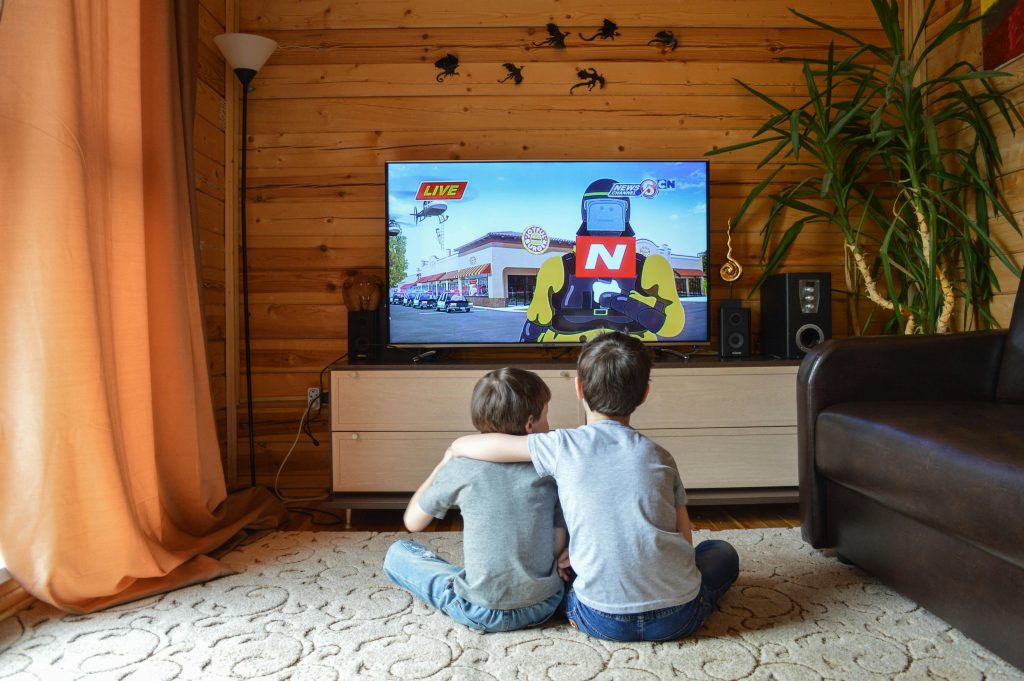
You might be wondering what the heck tv stimulation is and why it even matters for your toddler.
Have you ever noticed that your toddler is doing fine but then they watch a specific cartoon and, suddenly, they are bouncing off the walls?
You’re not imagining things. There’s a reason for that. The shows your child watches can highly impact their brains and behavior.
Here’s why:
Low stimulation cartoons are characterized by their gentle pacing, simple animation styles, and soothing visuals, which are carefully crafted to provide a calm and nurturing viewing experience for young children. These cartoons often feature soft colors, rounded shapes, and slow, deliberate movements, creating an atmosphere conducive to relaxation and focus.
In contrast, high stimulation cartoons tend to be fast-paced, brightly colored, and visually dynamic, with rapid scene changes, exaggerated movements, and loud sound effects. These things can overwhelm young viewers and overstimulate their senses. While low stimulation cartoons prioritize gentle storytelling, meaningful interactions, and subtle life lessons, high stimulation cartoons often rely on frenetic action, slapstick humor, and sensory overload to capture and maintain children’s attention.
Research Based Findings
In 2019, a study published in the Developmental Science journal detailed the findings of the effects of slow vs fast paced shows on children.
“The Immediate Impact of Different Types of Television on Young Children’s Executive Function” study aimed to investigate how exposure to different types of television content affects the executive function of young children. The study involved preschool-aged children who were randomly assigned to watch either an educational, slow-paced cartoon or a fast-paced, animated cartoon.
After watching the assigned program, the children’s executive function was assessed using various tasks that measure attentional control, working memory, and cognitive flexibility.
The findings of the study revealed significant differences in the immediate impact of the two types of television content on children’s executive function.
Children who watched the educational, slow-paced cartoon demonstrated better performance on tasks related to attentional control and working memory compared to those who watched the fast-paced cartoon. Specifically, children who viewed the slow-paced, educational program showed greater ability to sustain attention, inhibit irrelevant information, and remember relevant information.
In contrast, children who watched the fast-paced cartoon exhibited poorer executive function skills, including difficulties in maintaining attention and managing cognitive resources. These results suggest that the content and pacing of television programs can have a significant impact on young children’s cognitive development, highlighting the importance of thoughtful media choices for promoting positive outcomes in early childhood.
8 Amazing Options

So now that you know the possible negative effects of children’s programs, what do you do?? Never fear. These 8 shows are both entertaining and have a low stimulation level.
Curious George
Follow the adventures of George, a curious and playful monkey, as he explores the world around him with his friend, the Man in the Yellow Hat, learning valuable lessons along the way.
Low-Stimulus Attributes:
The animation style is simple and gentle. It features soft colors and rounded shapes, which can be visually soothing for toddlers. The storytelling focuses on simple, everyday adventures without overly stimulating action or fast-paced scenes. The pacing is generally slow and relaxed which allows young viewers to easily follow along and absorb the lessons taught in each episode.
Curious George streams on Hulu and PBS Kids.
Trash Truck
Hank and his best friend, Trash Truck, go on heartwarming adventures in their neighborhood. They embark on imaginative missions and discover the joy of friendship and community.
Low-Stimulus Attributes:
The animation style is charmingly simplistic, with a focus on hand-drawn illustrations and gentle movements. The narratives often revolve around quiet, imaginative play and exploration. The overall tone is calm and uplifting, promoting positive messages about friendship, empathy, and community.
Trash Truck streams on Netflix.
Tumbleleaf
Dive into the whimsical world of Tumble Leaf, where Fig the fox and his friends go on exciting quests. They solve problems and learn about science, creativity, and friendship.
Low-Stimulus Attributes:
The animation features a soft, pastel color palette and gentle, fluid movements that create a visually calming experience for toddlers. The storytelling emphasizes curiosity, creativity, and problem-solving in a slow-paced manner, allowing children to engage with the characters and concepts at their own pace. The imaginative world of Tumble Leaf is filled with natural wonders and whimsical creatures, providing a tranquil backdrop for learning and exploration.
Tumbleleaf streams on Amazon Prime Video.
If You Give A Mouse A Cookie
This cartoon is based on the beloved children’s book series. The show follows the adventures of Mouse and his friends as they embark on fun-filled escapades sparked by simple acts of kindness and curiosity.
Low-Stimulus Attributes:
The animation style is simple and bright, with colorful characters and uncomplicated backgrounds. The stories are based on the popular children’s books by Laura Numeroff. They feature relatable scenarios and gentle humor that capture attention without overwhelming sensory input. The pacing is leisurely, allowing for moments of reflection and interaction as children follow Mouse and his friends on their adventures.
If You Give A Mouse A Cookie streams on Amazon Prime Video.
The New Adventures Of Winnie The Pooh
Who doesn’t love Pooh?? Join Winnie the Pooh, Piglet, Tigger, and their friends in the Hundred Acre Wood as they embark on heartwarming adventures filled with friendship, laughter, and lessons about kindness and teamwork.
Low-Stimulus Attributes:
The animation maintains a classic, hand-drawn style that is easy on the eyes and reminiscent of traditional storytelling. The narratives center around adventures in the Hundred Acre Wood, focusing on themes of friendship, empathy, and imagination. The pacing is unhurried, with an emphasis on character development and meaningful interactions.
The New Adventures Of Winnie The Pooh streams on Disney Plus.
Guess How Much I Love You
This cartoon is inspired by the classic children’s book. It follows Little Nutbrown Hare and Big Nutbrown Hare as they express their love for each other through playful adventures and heartwarming moments.
Low-Stimulus Attributes:
The animation features soft, watercolor-like visuals that create a warm and inviting atmosphere. The stories revolve around the friendship between Little Nutbrown Hare and Big Nutbrown Hare, promoting feelings of security and affection. The pacing is gentle and contemplative.
Guess How Much I Love You streams on Amazon Prime Video, Vudu, Tubi, Peacock, and The Roku Channel.
Mister Roger’s Neighborhood
Raise your hand if you watched this as a child! ME!! Ok, so this isn’t technically a cartoon, but it needs to be in your tv line-up.
Step into the iconic neighborhood of Mister Rogers, where kindness, empathy, and imagination abound. In each episode, Mister Rogers and his friends explore everyday topics and navigate life’s challenges with grace and understanding.
Low-Stimulus Attributes:
The focus on real-world settings and practical demonstrations resonates with young children. Mister Rogers’ calm and reassuring presence, combined with the slower pacing and thoughtful exploration of everyday topics, creates a safe and comforting environment for learning and growth. The emphasis on kindness, empathy, and self-expression encourages children to engage with the content in a meaningful way.
Mister Roger’s Neighborhood streams on Amazon Prime Video and PBS Kids.
Puffin Rock
Jump into the enchanting world of Puffin Rock, where Oona the puffin and her little brother, Baba, embark on exciting adventures on the coast of Ireland. Together, they discover the wonders of nature and the importance of friendship and family.
Low-Stimulus Attributes:
The animation features soft, watercolor-inspired visuals and gentle, nature-themed soundscapes. The stories unfold at a leisurely pace. The emphasis on themes of friendship, family, and environmental stewardship promotes positive values and encourages children to connect with the beauty of the world around them in a peaceful and meaningful way.
Puffin Rock streams on Netflix.
The Best Way For Littles To Watch TV
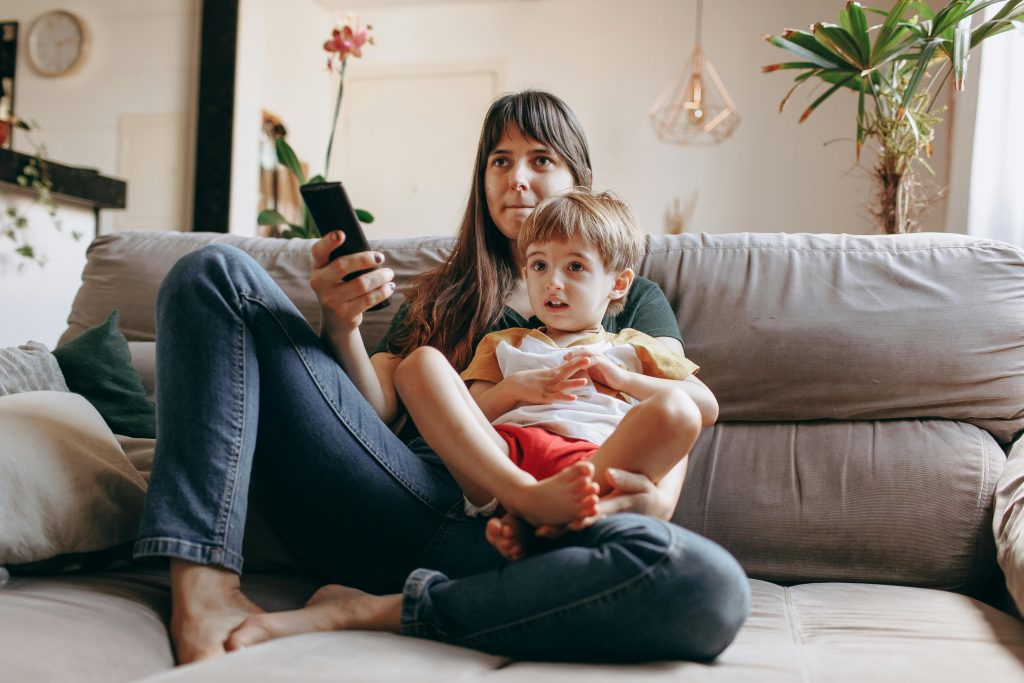
TV watching is a highly controversial topic these days. Screen time vs no screen time is a constant debate in the world of parenting.
But let’s be realistic. Not everyone let’s their children watch tv, BUT most of us do. So is it really that bad? I watched quite a bit of television as a child and I’m a healthy, well functioning adult. I don’t think tv watching is an immediate recipe for future disaster.
A recent article entitled The Benefits of Watching TV With Young Children gives some great info on how to make the tv viewing experience more beneficial for children.
The findings are pretty simple here. Watching tv with your child is more beneficial than letting them watch tv alone. Watching together creates a more educational experience as you are able to discuss what you are watching, ask open-ended questions, point out important lessons, and learn together. It also promotes family bonding and normalizes the practice of watching television together.
We have so many things to worry about and stress over as parents. If we watch tv together and really monitor what our children are watching, I think it’s possible to remove tv from the long list of worries.
Conclusion
Television can be an amazing tool for learning. Some shows are better than others. It’s up to the parents to monitor their child’s behavior and work out which shows are positive and which shows might be having a more negative impact on behavior. There is no one-size-fits-all here.
As your child grows, you will know what is appropriate for your little one. Trust your gut. You know best!
Did You Enjoy This Article? Here are more like it!
How To Get Your Toddler To Eat Veggies…Without Hiding Them In Muffins
DIY Magnetic Tile Puzzles For Toddlers: Personalized Edition

3 thoughts on “8 Low Stimulation Cartoons That Won’t Over Hype Your Toddler”